Serenity Valley Family Dentistry
Dentures in Fargo, ND
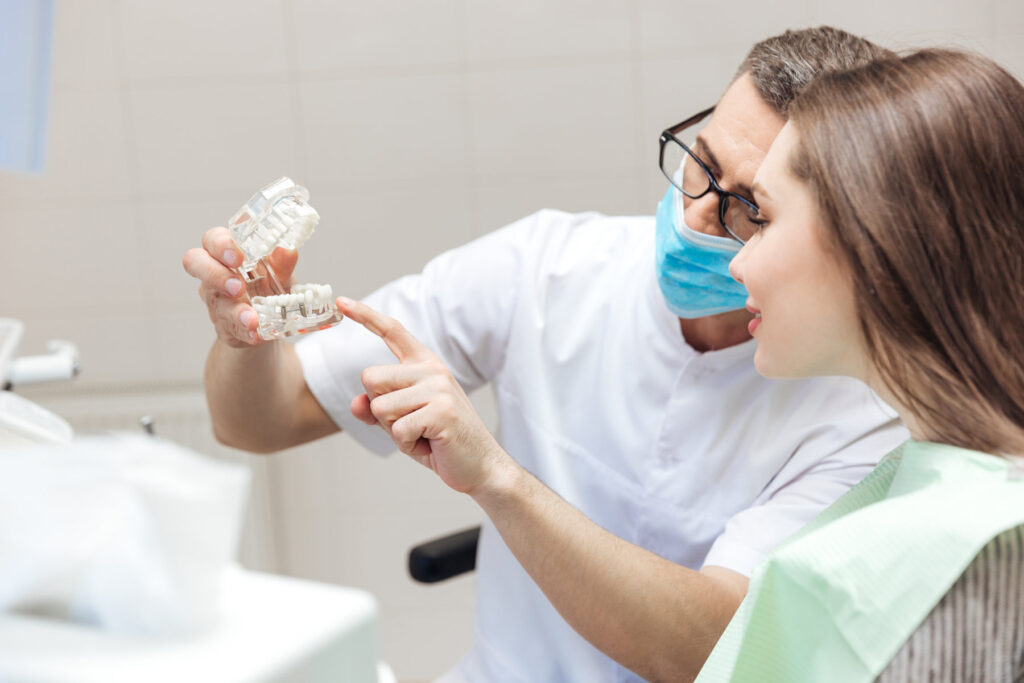
Losing teeth changes more than your smile. It affects the way you eat, speak, and feel about yourself in everyday moments. Whether you are missing a single tooth, several teeth, or an entire arch, the impact on your confidence and quality of life is real. The good news is that modern dentures have come a long way from the ill-fitting appliances of decades past. Today’s options are more comfortable, more natural-looking, and better suited to the demands of real life.
At Serenity Valley Family Dentistry, we approach tooth replacement as part of our broader commitment to restorative dentistry that addresses your whole health, not just the gap in your smile. Our team takes the time to understand your situation, explain your options, and help you make a decision that feels right for you, your comfort, and your long-term wellbeing.
Types of Dentures We Offer at Serenity Valley Family Dentistry
Dentures are not a one-size-fits-all solution. The right type depends on how many teeth you are missing, the health of your remaining teeth and gums, your lifestyle, and your goals for function and appearance.
Full Dentures
Full dentures, also called complete dentures, replace an entire arch of missing teeth. They rest on the gumline and are custom-fabricated to fit the contours of your mouth. Full dentures are removable, which makes them easy to clean, and they restore a significant amount of chewing function and facial structure that is lost when teeth are gone.
There are two types of full dentures: conventional and immediate. Conventional dentures are placed after the gums have fully healed following any necessary extractions, typically several weeks to a few months after tooth removal. Immediate dentures are placed the same day teeth are removed, so you are never without teeth during the healing process. Because the mouth changes shape as it heals, immediate dentures often require relining or replacement once healing is complete.

Partial Dentures
Partial dentures are designed for patients who still have some healthy natural teeth remaining. Rather than replacing an entire arch, a partial denture fills in the gaps left by missing teeth and is anchored to the surrounding natural teeth with precision clasps. This keeps the remaining teeth from drifting out of position, which can happen when gaps are left unfilled, and restores the natural appearance and chewing balance of your smile.
Partials are removable and can be taken out for cleaning. They are a practical, affordable option for patients who are not ready for, or not candidates for, a fixed bridge. According to the National Institute of Dental and Craniofacial Research, adults between the ages of 20 and 64 have an average of 25.5 remaining permanent teeth, meaning many adults are managing at least some tooth loss and may benefit from a partial restoration.
Implant-Retained Dentures
For patients who want a denture that stays firmly in place and does not shift during eating or speaking, implant-retained dentures offer a significant step up in stability and confidence. Rather than relying on adhesives or suction, these dentures snap onto a series of dental implants that are surgically placed in the jawbone. The implants serve as anchors, holding the denture securely while also stimulating the jawbone to prevent the bone loss that typically follows tooth removal.
It is important to note that we do not place dental implants in our office. Implant surgery is coordinated with a trusted oral surgeon or specialist in the area. Once the implants are placed and healed, we handle the restoration, designing and fitting your implant-retained denture so that it looks and functions beautifully. Our team works closely with your implant provider to make the process as smooth and well-coordinated as possible.
Are You a Candidate for Dentures?
Most adults who are missing one or more teeth are candidates for some form of denture. The evaluation process looks at several factors to determine which type is the best fit. If you are considering dentures, here are the general areas we assess:
A full candidacy evaluation considers your overall oral health. Before beginning the process, we take the time to review the following:
- Gum health: Healthy gum tissue and adequate bone support are essential for a comfortable, well-fitting denture. Active gum disease needs to be addressed before moving forward.
- Remaining teeth: For partial dentures, the health and stability of the surrounding natural teeth play a key role in the appliance’s fit and function.
- Bone volume: Implant-retained dentures require sufficient jawbone density to support the implants. A specialist will evaluate this before placement.
- Overall health: Certain systemic health conditions or medications can affect healing and oral tissue health, and we take these into account during our planning.
- Lifestyle goals: Your expectations for chewing function, speech, and appearance all factor into which option we recommend.
This is a conversation, not a checklist. We want to make sure you have all the information you need to feel confident moving forward. For patients who are anxious about dental procedures, we also offer sedation dentistry options to help make the experience more comfortable.
What to Expect During Your Composite Bonding Visit
One of the biggest advantages of bonding is that most cases are completed in a single visit. There are no lab-made restorations to wait on, and usually no need for anesthesia unless we are working near a sensitive area. You walk in with the concern and walk out with the correction, often in about an hour per tooth.
We begin by gently preparing the surface and applying a mild conditioning gel to help the resin adhere. Next, we layer and sculpt the composite to the desired shape, blending it against your natural contours. Once we are satisfied with the look, we harden each layer with a curing light, then trim, smooth, and polish the tooth so it reflects light the way enamel does. The result feels comfortable right away, and you can eat and speak normally as soon as you leave.

Caring for Your Dentures
How you care for your dentures directly affects how long they last and how comfortable they remain. With proper attention, a well-made denture can serve you well for years. Here are the core care habits that make the difference:
- Daily cleaning: Remove and gently brush your denture each day with a soft-bristled brush and a non-abrasive denture cleaner, never regular toothpaste, which can scratch the surface.
- Soaking overnight: Most dentures need to stay moist to hold their shape. Soaking them in water or a denture solution overnight keeps the material from drying out and warping.
- Rinsing after meals: A quick rinse after eating removes food particles and reduces the risk of staining and bacterial buildup.
- Cleaning your mouth: Even without natural teeth, it is important to brush your gums, tongue, and the roof of your mouth each day to remove bacteria and promote circulation in the tissue.
- Regular checkups: Your mouth changes over time, and dentures that fit well initially may need relining or adjustment as your gum tissue evolves. Regular dental visits help us catch fit issues before they become problems.
Avoid using hot water to clean or soak your denture, as heat can warp the material. Handle dentures over a folded towel or a sink of water so they do not break if dropped.
Partner with Serenity Valley Family Dentistry For Your New Dentures
Our team at Serenity Valley Family Dentistry has been a trusted part of the Fargo community since 2006, and we approach every patient with the same philosophy: take time, listen carefully, and help people make informed decisions about their care. Tooth loss can feel overwhelming, but it does not have to be. We will walk you through every step of the process and make sure you feel seen and supported, not rushed. We believe every patient deserves a restoration that fits their life.
If you are ready to explore your denture options in Fargo, we welcome you to contact our office to schedule a consultation. We are here to answer your questions, address your concerns, and help you take the next step toward a comfortable, confident smile.
Whatever you need
We Can Help with Your Sleep Disorder
Did you know that Obstructive Sleep Apnea (OSA) afflicts at least 25 million adults in the US—as many as 1 out of 5 adults. OSA is the end stage of a disease process called Sleep Disordered Breathing (SDB) which afflicts at least 80 million Americans, adults and children. Dentistry has a unique role to identify early signs of SDB and work with your sleep provider to stabilize and change the course of this disease.