Serenity Valley Family Dentistry
Tooth Extractions in Fargo, ND

A failing tooth has a way of taking over your day. Whether it is a back molar that has cracked beyond repair or a wisdom tooth crowding everything around it, the discomfort and uncertainty can leave you wondering how complicated the removal will be and how long it will take to feel like yourself again. The good news is that most extractions are far more routine and far more comfortable than people expect, and the right care before and after makes all the difference in how smoothly you heal.
At Serenity Valley Family Dentistry, we have served the Fargo community with a gentle touch and a conservative philosophy that always weighs whether a tooth can be saved before recommending removal. When an extraction is truly the best path forward, we handle both straightforward and more complex cases in one familiar place, and we connect the procedure to the bigger picture of your oral health through our full range of restorative dentistry services. Our goal is to make a stressful moment feel as predictable, calm, and well-supported as possible.
When a Tooth Needs to Come Out
We always start from a place of preservation. A tooth that can be repaired with a filling, crown, or other restorative treatment is almost always worth saving, and removal is reserved for situations where keeping the tooth would do more harm than good. Severe decay, advanced gum disease, a fracture below the gumline, and crowding that affects the rest of your bite are among the most common reasons an extraction becomes the healthiest choice.
Wisdom teeth deserve their own mention because they so often arrive without enough room to sit properly. When they push against neighboring teeth, trap food and bacteria, or stay trapped beneath the gum, removing them early can spare you years of trouble. We take time to explain exactly what we see on your imaging and why we are making a given recommendation, so you never feel rushed into a decision about your own mouth.
Simple and Surgical Extractions
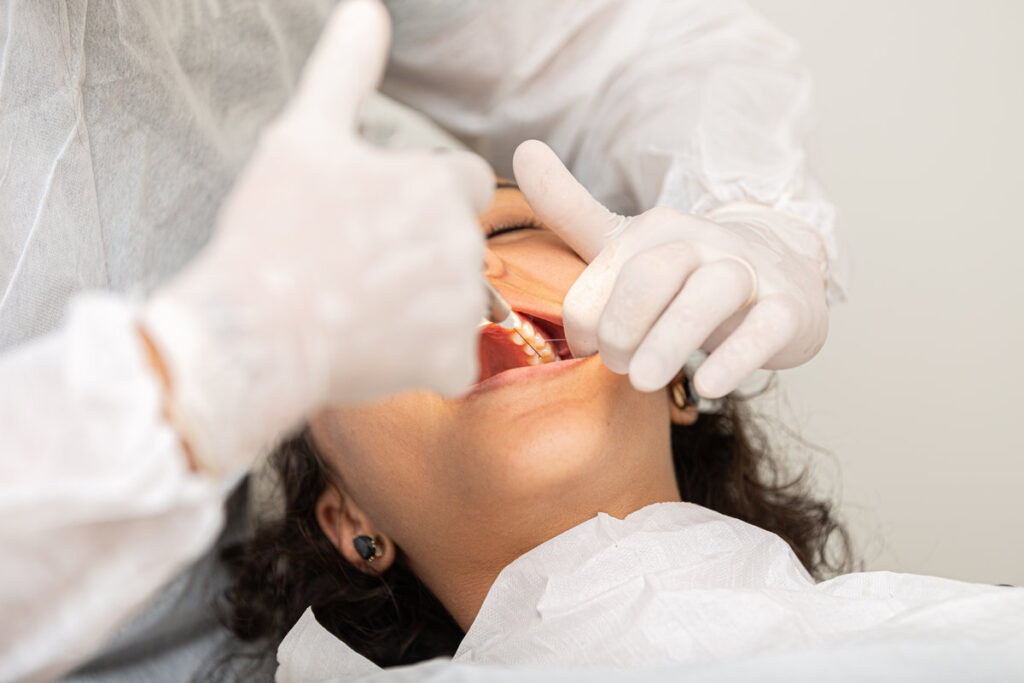
Not every extraction is the same, and understanding the difference helps you know what to expect. A simple extraction involves a tooth that has fully erupted and is visible above the gumline, which allows us to loosen and lift it out with gentle, controlled motion. A surgical extraction is needed when a tooth is broken at the gumline, impacted, or still developing beneath the surface, and it calls for a more advanced technique.
Dr. Ellie performs surgical extractions here at our practice, drawing on her focus in general and restorative dentistry and her hospital privileges for general anesthesia and sedation. That means complex cases that some offices would refer elsewhere can often be handled by a dentist you already know and trust. For patients who feel anxious about any procedure, our sedation dentistry options help you stay relaxed and comfortable from start to finish.
It is worth being clear about one boundary in our care. While we manage the extraction itself, dental implant placement is referred out to a trusted specialist. We focus on what we do exceptionally well: safely removing the tooth and restoring your smile once healing is complete.

Caring for Your Smile After an Extraction
The hours and days right after an extraction shape how well you heal, and a little attention goes a long way. The most important task is protecting the blood clot that forms in the socket, because dislodging it can lead to a painful complication known as dry socket. According to the National Library of Medicine, larger studies generally report an incidence of dry socket below 5%, and careful aftercare helps keep that risk low.
To protect your recovery, we send every patient home with clear, personalized instructions. The essentials are easy to remember and easy to follow:
- Rest and limit activity: Avoid strenuous exercise for the first day or two to allow the area to begin healing without strain.
- Skip suction and straws: Drinking through a straw, smoking, or vigorous rinsing can pull the clot loose and delay healing.
- Eat soft and cool foods: Choose options like yogurt, smoothies, and lukewarm soups while you avoid the extraction site.
- Keep the area clean: After the first day, gentle warm saltwater rinses help soothe the tissue and discourage bacteria.
Most patients feel noticeably better within a few days, and any swelling or tenderness fades steadily. Pairing good aftercare with your ongoing preventive dental care helps protect the rest of your smile, making another extraction far less likely down the road.
Schedule Your Tooth Extraction Consultation at Serenity Valley Family Dentistry
Founded in 2006, our practice has built its reputation in the Fargo area on honesty, comfort, and care that respects your time and your well-being. Patients travel from across the region to work with a team that treats every visit as a chance to connect and guide them toward better health, and that same gentle approach shapes how we handle every extraction, from the simplest to the most involved.
If you are dealing with a painful or failing tooth, you do not have to navigate it alone. Whether you are here in town or among the many patients who visit us from the wider Fargo area, we are proud to serve you and ready to help you find relief and protect your long-term health. Reach out today to schedule your consultation and let us walk you through your options with the care and clarity you deserve.

Whatever you need
We Can Help with Your Sleep Disorder
Did you know that Obstructive Sleep Apnea (OSA) afflicts at least 25 million adults in the US—as many as 1 out of 5 adults. OSA is the end stage of a disease process called Sleep Disordered Breathing (SDB) which afflicts at least 80 million Americans, adults and children. Dentistry has a unique role to identify early signs of SDB and work with your sleep provider to stabilize and change the course of this disease.